Showing posts with label jerusalem. Show all posts

Sunday, July 08, 2007

Ghetto Town Flavor


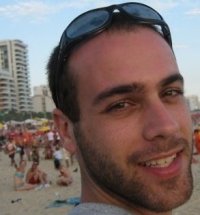
B-Boy of G-Town is comin' up outta the hood.

His hood is called Shuafat Camp, a sprawling refugee camp located on the outskirts of Jerusalem. The camp is surrounded by the eight-meter high concrete separation barrier. Even though all of the camp's inhabitants possess Jerusalem ID cards (since their homes fall within the municipal boundaries of Jerusalem), they must pass through an ominous Israeli checkpoint to enter the Holy City.

This be G-Town. Ghetto Town. The hip-hop consortium named after a village of chaos. A hamlet of disorder. A zone of utter misery. And an oasis of pride.

The group is trailblazing because although there have been a few Palestinian rappers, there have never been Palestinian Arabic-language rappers who explicitly repped Jerusalem. These folks have Jerusalem coursing thru their veins.

Some of the members of G-Town, namely its leader B-Boy (Mohammed al-Mughrabi), have twice been rendered refugees. The Arab-Israeli conflict goes in cycles, and the first two pinnacles of conflict in 48 and 67 dislodged the al-Mughrabis from their homes both times. First they fled from their native village of Lod in central Israel/Palestine, which had been slated to become part of the Arab state under the 1947 UN Partition Plan. Due to the family's partial Moroccan heritage, they relocated to the Moroccan quarter of Jerusalem's Old City, where a sizable number of Moroccans lived just steps away from the Western Wall.

The historically important Moroccan (Mughrabi) quarter settled hundreds of pilgrims from North Africa. After the Arab Legion decimated the adjacent Jewish Quarter in 1948, refugees flooded into the fully Arab-controlled Old City.

B-Boy's family was among those who moved to the neighborhood. However, their relative contentment under Jordanian occupation was short lived. Upon the Israeli conquest of the Old City during 1967's Six Day War, demolition crews destroyed the Moroccan quarter. In revenge for the 1948 Jordanian destruction of the synagogues and homes of the Jewish Quarter, the Israelis summarily wrecked the Moroccan Quarter upon their assumption of Old City control.

The stated purpose of the demolition was to make way for a plaza in front of Judaism's holiest spot, the Wailing Wall. The result was a remodeled section of the Jewish Quarter and fresh refugee status for hundreds of families. B-Boy's family was among them, and this was the 2nd time his family became refugees of the conflict.


This time, they relocated to Shuafat Camp, east of the Shuafat neighborhood in the northern suburbs of Jerusalem. The camp settled thousands of Arab refugees, who all became Israeli residents with prized blue Jerusalem ID cards.

B-Boy was born at the start of the 1st Intifada in 1987, when refugee camps throughout Palestine erupted in a paroxysm of stone-throwing. The camp has always been notoriously lawless, destitute, and neglected. Upon construction of the separation barrier at the height of the 2nd Intifada in 2003, Israeli authorities decided to separate Shuafat Camp from Jerusalem, forcing residents to enter the city via Shuafat checkpoint. Israel wanted nothing to do with this bastion of clan violence and perennial balagan.

The 7th of 8 kids in the al-Mughrabi family, B-Boy has perhaps come to terms with the reality of his living situation. His camp is patrolled by neither Israeli nor Palestinian security forces because Israel proper is protected from the camp by the separation barrier, and Israel does not wish for Palestinian police to provide security in a camp nominally located within the municipal boundaries of Jerusalem. A number of family-based clans control the camp.

CNN put together a clever report several months ago in which B-Boy was interviewed. The report focuses on the drug addiction and violence that have become unmanageable in Shuafat Camp.

B-Boy is a refugee twice over and is thus as Palestinian as they come. Yet, B-Boy goes to art school in the Musrara neighborhood of Jerusalem, a section of the city that straddles the line between East and West and was in fact No Man's Land between 48 and 67. B-Boy is a fluent speaker of Hebrew and English. Therefore, his outlook is global and far more open than one might expect. He does not limit his worldview to the dingy gutters of his native camp. His imagination stretches beyond the nightly rat-tat-tat and merciless gangbusters that run rampant in Shuafat Camp.

In addition to his burgeoning career as a hip-hop practitioner and his multimedia studies, B-Boy runs a recreation center for youth in the basement of his apartment bloc. He coaches ambitious young campers in the basics of Capoiera and always manages to thrive in his ghetto town, which locals sometimes refer jokingly to as "Chicago Camp."

The 20 year-old emerging artist represents for his community of almost 30,000 desperate souls, where the unemployment rate hovers around 50%.

G-Town has put on rap shows all over Israel and Palestine. The group's concerts inspire Arab the nascent hip-hop spirit from within the belly of Palestine.

The hip-hoppers were recently featured on the soundtrack of a documentary film about drugs in the mixed city of Lod, which was screened at Jerusalem's Cinemateque on July 12th. They also performed at a Jerusalem-area festival that marked the 40th Anniversary of the Israeli presence in the West Bank, where they were decidedly the most thuggin' of all the performers.

"We wake up and eat humus, but they wake up and eat Cornflakes," said B-Boy, referring to the difference between Shuafat neighborhood and Shuafat Camp. B-Boy said that the Stop Snitching mentality pervades in the camp and that most Palestinians from outside the camp harbor ill will towards Shuafat Camp residents, who are generally perceived as uneducated criminals.


Though B-Boy was schooled on Tupac and Eminem from an early age, he took his formal schooling much more seriously than his peers. Most of his friends never finished high school, but B-Boy devoured both his schoolwork and an endless quantity of rap education ranging from American pop to Arab rap groups such as Dam from Lod and MWR from Akko.

"Those guys just talk about Israel and drugs, but I wanted to rap about Jerusalem," said B-Boy. "The situation here is much worse than elsewhere."

He continues, "Not many people knew about American rap just a few years ago. Some kids could write poetry and other could sing. But no one had flow. I wanted to build a hip-hop city, a sort of culture factory with breakdancing, graffiti, etc. I wanted to teach rap to everyone in Shuafat Camp."

B-Boy says that previously he could never get respect, being from what he alternatively calls Gangsta Camp, Gangsta Town, and Ghetto Town.

Having released G-Town's first album in January 2007, B-Boy is poised to blow up. Subject matter on his tracks range from mothers and relationships to peace and humanitarianism.

"I don't like politics, but life is political," said B-Boy, who believes that Hamas probably takes better care of the common folk than Fatah, who many camp residents blame for years of neglect. Regardless, he's not too interested in the minutiae of Middle Eastern politics. B-Boy jokes about having been chased off by Israeli cops for throwing a concert on Salahdin Street in the Old City. Even so, B-Boy seems intent on sticking to a wholesome path towards refugee glory and redemption.

Since G-Town's tracks are generally in Arabic, it's difficult to comment on the lyrics. Yet, one English hook stands out from the rest.

On a track titled "One not Two," G-Town relates: "Life is so.../ Been living it once, not twice / Sing with us this song / We all live in one world, not two worlds."


B-Boy is enthusiastic about linking up with other musicians in Israel/Palestine. "I don't care for Subliminal's politics, but his music is good. Maybe we can make a song together one day if we meet up via David Broza, who recently brought us into the scene. Either way, we've got many years ahead of us in this rap game."

Tuesday, May 22, 2007

Temple Mount Disengagement & the 3rd Temple


PEACE سلام שלום

I will start off by proclaiming 3 truths about metaphysical, physical, and political reality, as it pertains to the everlasting conflict between the 3 monotheistic faiths in Jerusalem.

1. The Messiah will never come.

2. The Muslim claim to the Temple Mount complex will never attenuate.

3. All holy places were contrived at some point in time.

These truths being rather self-evident, a new Disengagement solution has become necessary to implement. If Jews are serious about making the 3rd Temple a reality, which I believe could materialize sucessfully, then they must take heed of the above facts. The status quo for Jews is focused upon worshipping a retaining wall with weeds throughout, bird excrement above, and angry Arabs on the other side. Judaism, the faith of the Judean polity, is undoubtedly a tribal, visceral, and earthen faith at heart. Yet, the time has come to cease worshipping a wall of somewhat inane significance. The physicality of the Western Wall is proof of the 2nd of two temples that existed upon the Temple Mount during the period of Roman rule over Judea. The consecration of this stone wall in contemporary times is highly indicative of the pain and suffering with which Jews yearned over the years to return to the Promised Land. There needed to be some concrete focal point for the diasporic aspirations. The wall symbolized infinite longing, unending lamentations, and eventual gathering of the exiles. It also united Jews in their belief in the sanctity of one location and created a sense of historical awareness in the prior dominion of the Jewish people in the Holy Land.

However, the wall shall no longer be the focal point of Jewish ritual observance. Jewish folks, though perpetually united in their connection to the land of their ancestors and the land of their current nation-state, deserve better than to worship a mere wall. The wall signifies the ongoing battle for geopolitical domination over the Temple Mount and juxtaposes the black-hatted Hasids below davening towards the east with the prostrating Mohammedans atop the mount directing their fervor southeastwards. The situation is ridiculous at best, warlike at worst. The conflict over Jerusalem's heart has led to the death of many heathens and believers. Prior to the Israelite conquest over 3300 years ago, Mount Moriah was revered by the Jebusites as the shrine of their favorite god Shalem, and this spot will always be revered. The site has thus changed spiritual hands many times, most recently as a result of the Arab conquest. It will change hands again one day. Either way, there is a better way to arrange this Holy City for the time being. There is a way to relinquish Jewish claim to the Temple Mount. The Holiest of Holies exists no more. Time for a drastic change. Jews must stop directing their collective spiritual energies towards a void, towards something that existed previously but that has since disappeared. The time has come to stop praying for some ridiculous eventuality. Messianic dreams, while encouraging to the faithful, are in vain. They are a reflection of idolatrous desires, anti-humanistic yearnings, and irrational prayer. Belief in the future arrival of a Messiah are primitive, ignorant, and misguided. Perpeuating messianic ideology is a boon to the faithful, for it gives them a reason to wake up in the morning and a teleological sense of inspiration. I cannot deride folks for having faith in something or someone that uplifts them. This is not my aim in critiquing the messianic ideology. However, I do intend to dislodge reliance on this mode of thought. Granted, messianic Jewish groups are somewhat fringe, but there is no doubt that mainstream Jews use the religious fringe to carry out the religious mission of the state of Israel. Religious-Zionists and Haredim are bestowed with the ability to do the Jewish people's religious bidding, and secular folks have consented to this arrangement. It is up to the religious folks to fight explicitly for the goals that mainstream folks are afraid to engage. It is time for an end to this age-old messianic element of Judaism, and it is time to carry out another Disengagement, on the psychological and physical fronts. The faith must evolve, and I will readily support belief in some sort of messianic age or idealized world. But, the hijacking of Judaism by messianic proponents must end.


Muslim domination of the Holy Mount exists presently. Although the area is under Israeli sovereignty, Jordanian religious authorities exert control over the buildings and the spiritual infrastructure of the site. Although security control is supremely in the hands of the Jewish political leadership, this dominion takes the form of colonial overlordship and does not actually translater into influence over how the Islamic holy sites operate. True, Israeli military officials can limit the number of worshippers in the event of security problems. True, Israel's government can unilaterally (with severe consequences) decide to undertake digging at the periphery of the Temple Mount. Yet, for all intents and purposes, Muslim holy sites are not going anywhere. The Muslim world would not stand for any type of challenge to their religious dominion over a place where Shalem, Abraham, Jesus, and Mohammed (and also numerous ordinary folks with Jerusalem Syndrome) have flexed their spiritual muscle. Regardless, Muslims aren't relenting. They've built two incredibly beautiful religious structures atop the Temple Mount. Let's admire the spiritual and aesthetic value that these buildings add to the Holy City. Jews need not challenge Muslims for control over this sacred space. Leave the Temple Mount to the Muslims. They've done nice things with the area. Though it was indeed taken by force and though Muslims often have not respected the holy sites of other faiths, it is time to respect the permanence of the Dome of the Rock and al-Aqsa. While Islam, like all religions, is deeply flawed - the Muslim Temple Mount is worthy of tremendous respect.

Next, I must clarify that there is absolutely no problem with creating something entirely new in Jerusalem. The time has come to build a 3rd Temple in the Jewish Quarter of the Old City. If need be, the walls of the Old City can be expanded to include the expanse of the brand new temple complex. Think universal, think tribal, think eternal! This renaissance of temple life is concurrent with the reJEWvenation of Israel itself. Jews are entitled to be proud of their creations in the political and spiritual spheres. Jews should not attempt to wrest control of the Temple Mount from the Muslims, even if it was the location of oh-so-many, oh-so-central historical-mythological events. Jews should triumphantly erect a new, 3rd Temple in the part of the city that is currently theirs. I am in favor of importing a huge quantity of dirt in order to raise the elevation of the Western Wall Plaza and adjacent sections inside and outside the Turkish-built Old City walls. The 3rd Jewish Temple should be at least as visible as the Muslim holy sites on the Temple Mount. History is all about reinventing identity and place, and now is the perfect time to revitalize Jerusalem and renew the value of the Jewish presence in the city. Enough of yearning for something that will never happen. Time to create a majestic temple once again.

Being practical is acceptable nowadays. Jews should settle for what makes rational sense and what minimizes geopolitical conflict. Muslims have no right to dictate what Jews do with the Jewish quarter of the Old City. The golden rule is supposedly at the heart of the Jewish faith, and so, in order to be a light unto the nations, Jews should renounce all desire to return to the Temple Mount and shift their focus to a new temple. The current Western Wall can continue to be a retaining wall for the new Jewish Temple Mount complex to the West of the Wall. The Wailing Wall can continue to divide the Jewish section of the Old City from the Muslim Quarter. Enough of these rabbinical, ministerial, and ridiculous visits to the Temple Mount. Jews should act as a mensch for the rest of the world. There's a Jewish Quarter that can be expanded, emboldened, and heightened to proportions befitting a 3rd Temple. Israel should not constantly challenge Muslim control. Instead, it should disengage from the struggle over the Temple Mount and build anew.

The recent Jerusalem Day national-religious parade through the Arab areas of Jerusalem renewed my antagonisms towards rightwing Zionists. These folks truly enjoy flaunting Jewish domination over Arab people. I resent the way that these fanatics give Israel a bad name. By recklessly asserting Israeli rule over Arab East Jerusalemites, these festive extremists make life difficult for security forces, mainstream Israelis, and all Arabs. There is no problem with Jews being proud and patriotic. However, these national-religious paraders thought it fit their day's duties to bang on the doors and walls of homes and businesses in the Arab sections of the Old City. Jewish chauvinism and Islamic chauvinism are close kin. I feel highly uncomfortable when exposed to either one. Clearly, both forms of fundamentalist expression are in response to the other. However, the existence of reactionary Islamism is no excuse for the emergence of callous, disgusting religious Zionism. The blatant disrespect that these folks displayed was unfathomable. I had not thought that Jews were capable of showing this sort of attitude towards fellow Jerusalemites. Clearly this was possible only due to the massive security presence, which enabled taunting and other absurdities. The time has come to limit the power of these extremists and build anew a temple that buttresses the power of the proud, spiritual, and respectful folks that belong to the civilized world. This region cannot be dominated by polarized factions of immature fanatics whose world is one of primal fantasy and tribal strife.

The 3rd Temple's architecture should be a combination of styles. Though the construction process will be the most highly contentious building campaign ever undertaken, I think the Temple should be a hybrid of Cubist-Modernist, Moorish, Jerusalemite, Byzantine, Turkish, and Expressionist-Futurist influences. Let the design competition commence.

The 3rd Temple period shall last for time immemorial and shall usher in a new era of justice, unity, and humanity.

PEACE سلام שלום

Friday, March 16, 2007

City of Peoples

In anticipation of a fabulous contest of the imagination that challenges people to elucidate their vision for the future of Jerusalem, I joined up with an Ir Amim tour of the separation barrier in East Jerusalem a few days ago. For four hours, our tour leader informed us about the causes and effects of the wall that runs through the eastern parts of Jerusalem. This organization takes a decidedly humanitarian stance, taking into account the civilian needs of people on both sides of the civilizational divide.

I should commence by stating my general point of view on the current state of the wall, as it pertains to the political entity of Jerusalem, Yerushalyim, Al-Quds. The wall seeks to cut off most of the Arab population of north, east, and south Jerusalem from the future state of Palestine. (It is a important to note that public discourse refers to all of pre-1967 Arab Jerusalem as “East”). The wall, as it currently exists in East Jerusalem, is a grave mistake that pre-empts any Palestinian attempts to create a contiguous state with a thriving Al-Quds metropolis at its center. The so-called Jerusalem envelope plan is an ill-advised way to thwart what ought to be the nucleus of Palestine.

While the idea of the wall in and of itself poses innumerble difficulties in terms of the free movement of people and goods, the wall as it stands now is more of a catastrophe than it ought to be. It largely separates Jerusalem Arabs from West Bank Arabs, while also segregating a huge number of West Bank Arabs from Israel proper. If the wall is truly to be built in such a way that respected the Palestian right to territorial justice, there are at least ten Arab neighborhoods of East Jerusalem that ought to be on the Palestinian side of the fence. If reconstructed in said manner, the wall would render most Arab residents of Jerusalem residents of Arab Al-Quds, which is where the vast majority want to be. It is indeed the case that these folks vote in Palestinian elections and are not Israeli citizens. Some of the neighborhoods that need to be switched over to the Palestinian side (i.e. the wall needs to be rerouted in a very complex and intricate process of territorial segregation) include Shuafat, Beit Hanina, the Arab quarter of the Old City, Abu Dis, and Beit Safafa.

Much of Arab East Jerusalem is made up of urbanized villages that barely connect the various nodes of economic life in the region. The predominant urban core of East Jerusalem is just north of Old City around the Damascus Gate. This needs to become the focal point of Al-Quds. The wall can indeed be rerouted in such a way that would shift approximately 200k Arab Jerusalemites into the sovereign Arab districts of the capital. This must occur, as most of these folks have no desire to be ruled over by the Israeli government. This process is very tricky because of the Israeli inclination to include a maximum amount of Jews and land but a minimum number of Arab inhabitatnts on its side of the separation barrier.

Jerusalem was traditionally the economic, medical, educational, and religious focal point of Palestinian national life. By solidifying its strangehold on the Jerusaelm envelope, Israel is crushing viability of what was once the Palestinian metropolitan core, resulting in the emergence of several other de facto hubs of Palestinian urban life, namely Ramallah and Abu Dis.

The wall seeks to make permanent Israeli control over all of Jersusalem, for a number of political and military reasons. There is a burning desire to make this ancient city, which has changed hands countless times throughout history, the eternal and indivisible capital of Israel. Israeli seeks to fortify Jewish control so that the city is never again threatened by invaders. The myth of containment has convinced too many people that such a future is possible. This fallacy can only last so long. The vast majority of Arab neighborhoods need to be under Arab sovereignty, and the Old City needs to be monitored by a battalion of thousands of international observers under the auspices of the EU, UN, and Arab League.

Recent events in the Holy City have been rather bizarre, since the Judaization of Jerusalem and the simultaneous Al-Qudsization (Arabization) have resulted in a dramatic building race to place irreversible facts on the ground. At the same time as approximately 1% of "illegal" homes are demolished by the Israeli authorities and as the government makes it difficult for Jerusalem residents to maintain their legal residency, wealthy Arab Gulf states continue to promote a very generous subsidy program for Arab construction in East Jerusalem.

Some failures of the Israeli policy in Jerusalem include one fact mentioned above: the wall largely divides Palestinians from Palestinians, making it incredibly difficult to conduct day-to-day business amidst a mind-numbing checkpoint and permitting system. However, many people believe that the Arab popuation is ballooning, due to an influx of workers and of people who merely do not want the wall to cut them off from their jobs and schools in Jerusalem. Some Arabs, God forbid, have been forced to attend Jewish hospitals or move into Jewish neighborshood because they have been cut off from West Bank and need expansion room in East Jerusalem.

New construction of Jewish neighborhoods has been furthered by the "collaboration" of certain Arabs who sell land to Jews (an offense punishable by death in areas under PA jurisdiction). Indeed, some two-thirds of West Bank settlements are apparently built on land that was purchased legally from Palestinians. Regardless, those who sell to Jews (in order to reap a greater profit than they otherwise would in the Palestinian housing market) make sure to book a one-way plane ticket to the West before they ink the contract. Meanwhile, Jewish neighborhoods constructed on the "east" side of the Green Line are no longer considered settlements these days. They are regarded as true neighborhoods that are not going to disappear. Palestinians have apparently even conceded that Israel can hold onto Ma'ale Adumim in a peace deal. The many Jewish East Jerusalem neighborhoods such as French Hill, Pisgat Ze'ev, Har Homa, and Gilo will not be evacuated like the Gaza settlements. Israel has produced facts on the ground that cannot be retracted.

Yet, the demographic paradox remains: Arabs are nonetheless flocking to Jerusalem so that they don’t get cut off from families, schools and jobs within Israel. Moreover, the Arab growth rate is staggering.

One must always consider the sometimes ineffable reality of coexistence in the street, places of employment, and elsewhere. Though minimal, it still lives on in Jerusalem, a city that is 1/3 Arab. The existence of two viable and secure states side-by-side could be enriched by the construction of new shared public spaces on the future "no man's land" that will straddle the wall. The wall, if and when it is rerouted to encompass the vast majority of Arab neighborhoods, will still be a horribly ugly method of to cloistering an unfortunate population. However, this is the reality that has come to pass.

Do security considerations trump political ones? The irrefutable reality is that Jerusalem suffered the brunt of the 2nd Intifada - 30% of suicide bomb attacks carried out in Israel. The Israeli state entertains the right and responsibility of molding a security apparatus that keeps its citizens safe. The wall has indeed been successful on this front. It is arguable whether the following factors have had more or less impact than the wall in the reduction of attacks on Israel: the death of Arafat, Hamas' hudna, intelligence successes, and the economic attrition of the Palestinians. Additionally, the wall has also dramatically reduced car thefts.

Nonetheless, the construction of the wall in East Jerusalem is one of a series of destructive, unilateral steps that have led to the de facto annexation and consolidation of Israeli control over Jerusalem. Despite the clear need to negotiate the implementation of official policies, Israel has not been able to engage successfully with an Arab peace partner.

Israel has done somewhat of an opposite move around Pisgat Ze’ev to the north. It has unilaterally cut off poor, unwanted Palestinians in the Shuafat refugee camp (who possess Jerusalem ID cards and live within the municipal boundaries of Jerusalem) from the rest of the city by building the wall around the north, west, and south of this slum. In 1967, Israel thought it wanted to include this area within Israel by annexing it, along with the rest of the other Arab neighborhoods of the Jerusalem municipality. Alas, now Israel has unilaterally place this hood on the Palestinian side of the wall.

The facts on the ground demonstrate that the Jerusalem municipal boundaries are a function of military planners who have always sought control of topographically commanding areas. The south Jerusalem neighborhood of Gilo is one example, which ensured that Jewish neighborhoods such as Catamon (vulnerable to shelling in the pre-1967 years) could no longer be menaced from the south. Har Homa is also an example of a neighborhood that makes little to no economic sense (and is also outside the "real" city) but was created due to territorial needs. The added security benefits ostensibly outweighed the costs of linking this area up to water, gas, and electric lines.

In most of the Jewish Jerusalem areas that have been created since 1967, a suburban quality of life pervades. Industrially prefabricated and quickly constructed houses betray an utter lack of aesthetic grace but nevertheless result in efficient and functional bedroom communities.

The Ir Amim tour mentioned that the fence is okay in certain places. When the wall has a minimal effect on the physical integrity of a given Palestinian village, then it is much more palatable. Where the wall allows for relatively hassle-free checkpoint passage through no longer crude, makeshift structures but through permanent international border crossings, one is reminded of how Israel is mapping out the future of the East Jerusalem, and of how the Palestinians have not successfully mounted a campaign to capitalize on their assets.

One pervasive problem has been the tacit approval given by the Israeli government private citizens to develop previously virgin lands, further rendering any sort of wall re-routing impossible. The apartment complex of Nof Tsion in Jabal Mukaba is one example of this, which would complicate my proposed re-routing by placing a new Jewish housing development on what ought to be the Arab side of the fence. In addition, developments on the west side of the fence near Abu Dis pose the same problem. The Israeli government must force politically influential developers to halt such construction, as it will complicate future efforts enormously.

To summarize the current dilemma, it is important to evince a few points. The Arabs of East Jerusalem vote in Palestinian elections and refuse to become Israeli citizens. They do not vote in Jerusalem municipal elections, and thus there are no Arabs in the city’s government. While some do not pay taxes, most do because the repeipt of tax payment is proof of Jerusalem residency and therefore means that the government cannot banish you from Jerusalem. However, there is a clear disparity in government services provided to Arab neighborhoods. This development issue may not just result from disrimination, yet it is important to address this dichotomy. One striking example of the disparity is the dilapidated North/South road in East Jerusalem, which is a pock-marked road to nowhere compared with the Israeli counterpart in the western part of the city. Therefore, Jerusalem is truly two cities. And, I propose that if the wall is to exist, the wall should do a better job of running between the two Jerusalems. The wall should allow for a united Arab Al-Quds, separate and distinct from Jewish Jerusalem.

Though these solutions are odd and perhaps also impractical, it is clear that sovereign states need not be territorially contiguous. Some parts of East Jerusalem might become either Jewish enclaves on the Palestinian side of the wall or Arab enclaves on the Israeli side of the wall. Though complex to solve, citizenship and jurisdiction issues can be sorted out. As for territorial contiguity, such difficulties aren't insurmountable. Hebrew University was an Israeli enclave in Jordanian East Jerusalem until 1967. Next, Gaza and the West Bank will inevitably be part of one Palestinian country connected by a sunken highway. Though they will not be physically adjacent, these entities will still be united under the Palestinian red, black, and green. Armenia and Alaska are two other examples where states do not enjoy territorial continuity but where workable solutions have provided for stability and predictability in quotidian life.

On the ground, tunnels and bridges that bypass the "other" in the West Bank and Jerusalem will allow for two states to exist simultaneously in three dimensions, which is of course not possible to express easily on a two dimensional map. There is an ongoing reality that necessitates compromise on issues such as roads, airspace, land use and development.

On the one hand, while crowding leads some Arabs to leave East Jerusalem, many just build illegally and risk demolition. There is continuous fear of house razing by the Israeli authorities. (ICAHD is an organization that works to combat blatant housing discrimination in Jerusalem). East Jerusalem Arab artisans, farmers, and traders have limited access to West Bank markets. Econonomic suffocation has been acute, but it remains a notable fact that Arab East Jerusalemites have a vested interest in not terrorizing. Thusly, evidently no bombers have come from Arab East Jerusalem.

Next, the Ma'ale Adumim problem east of Jerusalem is very difficult to resolve but is workable under my plan. At 53 sq. km., it is bigger than Tel Aviv. While incendiary and unnecessary, the E-1 plan to build industry, housing, parks, and a university is doable as long as there is a Palestinian highway that links Ramallah and Bethlehem and overpasses the Israeli extension into the east. It is necessary to draw a map of this to show what it would actually look like.

Through it all, it is crucial to recognize the impermanence of the wall. It might last 20 years, or perhaps even 50 years. But, it is just like its predecessor in Berlin that divided the poorer, ideologically-distinct, and subaltern east from the more prosperous West. It will come down eventually, once there is a general consensus about the inanity of arbitrary dividing lines and once World War IV has come to a decisive end. The wall will be finished one day. However, in the meantime, the wall is a necessary evil to keep suicide bombers out of Israel, to keep Jews from settling in the rest of Palestine, and to maintain healthy distance between the two peoples. It is a truly lamentable state of affairs, in which a small minority ruins the potentially hatrmonious relations that began to ferment from 1994 to 2000 and that were completely shattered by the 2nd Intifada.

The wall seeks to minimize the demographic threat posed by robust Arab population growth. As an economically prosperous metropolitan region, the Jerusalem municipality naturally needs to absorb cheap labor from the surrounding areas. Workers flock to the city to fill the void left by Hasidic people who don’t work, and paradoxically, to build many of the rapidly growing Jewish neighborhoods. Indeed Arab construction crews have built much of Israel, the separation barrier, and the Jewish settlements in the West Bank.

In sum, the conflict lives on. The City of Peoples exists, self-divides, and expands. Jerusalem is a beautiful balagan.
 
Google
Locations of visitors to this page Locations of visitors to this page Locations of visitors to this page Locations of visitors to this page