On day two of a likely month-long murder trial, a confident key witness testified that he saw the defendant pull the trigger just before nightfall on April 6, 2006. As part of a bargain with the Manhattan District Attorney’s office, Harlem resident Eric Calvin offered his account Monday in exchange for exoneration from a string of drug crimes.
 The defendant, Travis “Trav-Ice” Woods, lives down the street from Calvin in the Martin Luther King Jr. Towers and faces a possible life sentence for his role in the murder of Barry “B-Low” Miller, among other charges, including attempted murder, drug conspiracy, and weapons violations.
The Woods case is one of several cases that resulted from Operation All the King’s Men, a police investigation that began in early 2005. The original watershed indictment from December 2006 charged 43 suspected drug dealers and three suspected gun dealers. The suspects were associated with two rival gangs in Central Harlem, the King Towers Gang and the Schomburg Crew, according to the Manhattan District Attorney’s Office.
“The King Towers Gang’s PCP product was well-known in the area because the defendants sometimes sold the drug packaged in empty baby food jars,” according to the D.A. Moreover, the gang grossed over $1 million annually in dealing PCP and crack cocaine around 115th Street and Lenox Avenue next to the Martin Luther King Jr. Towers.
Manhattan assistant district attorneys Christopher Conroy and Eric Arnone are prosecuting the Woods case before Judge Bruce Allen of the New York State Supreme Court. Arnone quizzed the case’s key witness, Calvin, who appeared alternatively discombobulated and composed in articulating his account of the murder, as well as in explaining his own checkered history of drug dealing.
“After approaching B-Low from the back, Trav Ice looked straight at him, raised both hands on fired four shots,” said Calvin, who identified Woods as having worn a black thermal hoodie, black jeans, and black Nike ACG boots on the night of the murder.
Both Arnone and Williams attempted partial reenactments of the murder, using cartographic and photographic evidence, but Calvin’s responses about sequence and direction somewhat seemed to confuse the jurors. The 16-member jury also appeared perplexed by a seemingly endless array of drug dealer street names, including “Leather,” “Playboy,” “Foot,” and “Ant.”
Calvin, a 21-year-old 10th-grade dropout, said he started robbing drug dealers at gunpoint with his friends and dealing PCP, crack cocaine, and powder cocaine in his early teens.
Calvin also discussed the logistics of dealing PCP, which is also known as angel dust, embalming fluid, wet, and sherm. He stated that a $50 investment in PCP “juice” could result in a $500 profit for a street level dealer.
Woods, who wore a white dress shirt and a striped blue tie, appeared unconcerned by Calvin’s incriminating words.
According to prosecutors, Miller was the ringleader and chief drug supplier of the King Towers Gang. They said that Woods, a gang manager and enforcer, killed Miller so he could take over.

"It is easy to say he did it, but it doesn't mean he did it. We're being tried by association," said court-appointed defense attorney Norman Williams, before poking holes in Calvin’s statements during an awkward cross-examination that included questions about Calvin’s consumption of marijuana, relationship with the D.A., and geographic details of the crime scene.
“Ultimately, the success of Calvin’s testimony depends on how much the jury believes him,” said Williams. Having represented Woods for 10 years, Williams added that he hoped Calvin’s testimony was not too damaging in bringing about “the best possible result: a full acquittal.”
Kevin “JD Black“ Harris and Terry “JB“ Patterson, two additional defendants named in the original grand jury indictment, both pleaded guilty, according to Williams.
Jurors’ ears perked up when prosecutor Arnone asked Calvin how he was perceived in his community for having agreed to testify as a crucial witness in the murder trial of a fellow King Towers resident.
“I’m viewed as a snitch - a rat,” said Calvin, who could barely look at the defendant after identifying him by name.
“You know that where I’m from it don’t work like that. I grew up with these people. What happens to snitches is you get shot,” said Calvin.
“But, I have more things to live for. My five-month-old girl and other kids are why I’m cooperating,” added Calvin, who testified that he would receive $500 and reimbursement for cab fare and meals for his testimony, in addition to vindication from several drug charges.
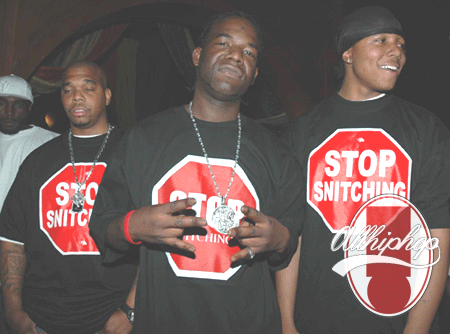
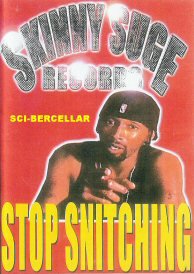
Defense attorney Williams acknowledged safety concerns in an urban environment that often brutally enforces the “Stop Snitching” dictum. Calvin’s attorney, Gabriel Tapalaga, declined to comment.

Woods is also charged with the attempted murder of Germaine “Maine” Gordon, who Williams expects to testify against his client.
Later in the week, a doctor, chemist, and more cops will be testifying. On Monday, the medical examiner will take the stand, said Jennifer Kushner, spokesperson for the District Attorney. Kushner would not say whether the District Attorney had ironed out cooperation agreements for any other members of the King Towers Gang to testify.