Showing posts with label public housing. Show all posts
Showing posts with label public housing. Show all posts
Thursday, October 09, 2008
East Harlem Public Housing and Homicides (2008)
View Larger Map
This map shows the location of public housing projects and murders in 2008 within Manhattan Community District 11, which encompasses NYPD precincts 23 (East Harlem South) and 25 (East Harlem North).
The 23rd Precinct went from 31 murders in 1990 to 2 thus far in 2008. There are 23,028 public housing units in Community District 11, the largest number in any NYC district.
Only two of the six murders in East Harlem are marked. The locations of the other four have not yet been found...Any and all tips are welcome...
(Sources: New York City Housing Authority, Emporis, NYPD's 23rd Precinct, and Wikipedia)


Wednesday, October 01, 2008
King Towers Homicide

 On day two of a likely month-long murder trial, a confident key witness testified that he saw the defendant pull the trigger just before nightfall on April 6, 2006. As part of a bargain with the Manhattan District Attorney’s office, Harlem resident Eric Calvin offered his account Monday in exchange for exoneration from a string of drug crimes.
 The defendant, Travis “Trav-Ice” Woods, lives down the street from Calvin in the Martin Luther King Jr. Towers and faces a possible life sentence for his role in the murder of Barry “B-Low” Miller, among other charges, including attempted murder, drug conspiracy, and weapons violations.
The Woods case is one of several cases that resulted from Operation All the King’s Men, a police investigation that began in early 2005. The original watershed indictment from December 2006 charged 43 suspected drug dealers and three suspected gun dealers. The suspects were associated with two rival gangs in Central Harlem, the King Towers Gang and the Schomburg Crew, according to the Manhattan District Attorney’s Office.
“The King Towers Gang’s PCP product was well-known in the area because the defendants sometimes sold the drug packaged in empty baby food jars,” according to the D.A. Moreover, the gang grossed over $1 million annually in dealing PCP and crack cocaine around 115th Street and Lenox Avenue next to the Martin Luther King Jr. Towers.
Manhattan assistant district attorneys Christopher Conroy and Eric Arnone are prosecuting the Woods case before Judge Bruce Allen of the New York State Supreme Court. Arnone quizzed the case’s key witness, Calvin, who appeared alternatively discombobulated and composed in articulating his account of the murder, as well as in explaining his own checkered history of drug dealing.
“After approaching B-Low from the back, Trav Ice looked straight at him, raised both hands on fired four shots,” said Calvin, who identified Woods as having worn a black thermal hoodie, black jeans, and black Nike ACG boots on the night of the murder.
Both Arnone and Williams attempted partial reenactments of the murder, using cartographic and photographic evidence, but Calvin’s responses about sequence and direction somewhat seemed to confuse the jurors. The 16-member jury also appeared perplexed by a seemingly endless array of drug dealer street names, including “Leather,” “Playboy,” “Foot,” and “Ant.”
Calvin, a 21-year-old 10th-grade dropout, said he started robbing drug dealers at gunpoint with his friends and dealing PCP, crack cocaine, and powder cocaine in his early teens.
Calvin also discussed the logistics of dealing PCP, which is also known as angel dust, embalming fluid, wet, and sherm. He stated that a $50 investment in PCP “juice” could result in a $500 profit for a street level dealer.
Woods, who wore a white dress shirt and a striped blue tie, appeared unconcerned by Calvin’s incriminating words.
According to prosecutors, Miller was the ringleader and chief drug supplier of the King Towers Gang. They said that Woods, a gang manager and enforcer, killed Miller so he could take over.

"It is easy to say he did it, but it doesn't mean he did it. We're being tried by association," said court-appointed defense attorney Norman Williams, before poking holes in Calvin’s statements during an awkward cross-examination that included questions about Calvin’s consumption of marijuana, relationship with the D.A., and geographic details of the crime scene.
“Ultimately, the success of Calvin’s testimony depends on how much the jury believes him,” said Williams. Having represented Woods for 10 years, Williams added that he hoped Calvin’s testimony was not too damaging in bringing about “the best possible result: a full acquittal.”
Kevin “JD Black“ Harris and Terry “JB“ Patterson, two additional defendants named in the original grand jury indictment, both pleaded guilty, according to Williams.
Jurors’ ears perked up when prosecutor Arnone asked Calvin how he was perceived in his community for having agreed to testify as a crucial witness in the murder trial of a fellow King Towers resident.
“I’m viewed as a snitch - a rat,” said Calvin, who could barely look at the defendant after identifying him by name.
“You know that where I’m from it don’t work like that. I grew up with these people. What happens to snitches is you get shot,” said Calvin.
“But, I have more things to live for. My five-month-old girl and other kids are why I’m cooperating,” added Calvin, who testified that he would receive $500 and reimbursement for cab fare and meals for his testimony, in addition to vindication from several drug charges.
Defense attorney Williams acknowledged safety concerns in an urban environment that often brutally enforces the “Stop Snitching” dictum. Calvin’s attorney, Gabriel Tapalaga, declined to comment.

Woods is also charged with the attempted murder of Germaine “Maine” Gordon, who Williams expects to testify against his client.
Later in the week, a doctor, chemist, and more cops will be testifying. On Monday, the medical examiner will take the stand, said Jennifer Kushner, spokesperson for the District Attorney. Kushner would not say whether the District Attorney had ironed out cooperation agreements for any other members of the King Towers Gang to testify.
Friday, August 29, 2008
Mo the Mayor
Mo is the affable, unofficial mayor of his public housing project. Having transformed himself from high school basketball star to feared street legend to inspirational East Harlem community leader, Mo embodies the gritty paradoxes of his environs.
Having lived in the same 8th floor apartment at 1641 Madison Ave. virtually his entire life, Mo routinely asks neighborhood residents “You aight?” with an unshakable confidence that he will be able to respond accordingly even if the answer is “no.” Mo conveys the impression that his power extends well beyond his building, one of four towers in the Lehman Village Houses, spanning from 110th St. to 107th St.
When Mo drives across 110th Street, neighbors approach his vehicle to inquire about the affairs of the block on the other side of the Metro North viaduct. Mo responds, “I have the situation under control.”
Mo’s neighborhood is composed of virtuous souls and unsavory characters. Since gregarious Mo learned how to hustle, he has been ambitiously multi-tasking. “I’m an ex-drug dealer who never went to prison,” says Mo, whose real name is Malik Jenkins.
“Mo is known everywhere,” said Ansar “Pacino” Bing, a film editor at Universal Remote Productions who is a longtime friend of Mo’s. “We have the same ‘862’ tattoo on our forearms.”
Mo says this number represents a pact that a group of Harlem men formed in the late 1990’s, involving gang activities around 143rd St. and Convent Ave. Mo will not comment on the record about the extent of the group.
Mo feels comfortable mentioning that, by his 16th birthday, he drove luxury sedans and earned his father’s bi-weekly paycheck in 36 hours. But, his demeanor is perpetually nonchalant, with an alternatively boyish grin and intent stare. Sometimes he betrays an almost Southern charm that derives from his parents’ Carolinian origin.
34 year-old Mo grew up in a two-parent household, but his parents both passed away in 2007. Mo has a seemingly wholesome relationship with his gentle wife Kendra, a public school teacher. Mo’s most recent birthday was celebrated by renting out a party bus for his 15 year-old son Madison and his teenaged pals.
He is dedicated to fostering a positive climate for his son and stresses his penchant for sponsoring youth basketball, film, and music programs. He is also on his building’s housing board. Although Mo seems to have a new cell number every week, he says he is fully extricated from the urban pharmaceutical industry. Regardless, the mayor never stops serving his constituents.
“I’m here for a reason - my story has to be told,” says Mo, adjusting the three rosaries around his bulky neck. “Some of the things in my life were meant to be done. Yet, I’m a young, black man with no felonies – how is that?”
Sam, the DJ at one of Mo’s recent parties for neighborhood adolescents, said, “God has a cloud around this man, but stop me there, I don’t want to start preaching about Mo.”
Having lived in the same 8th floor apartment at 1641 Madison Ave. virtually his entire life, Mo routinely asks neighborhood residents “You aight?” with an unshakable confidence that he will be able to respond accordingly even if the answer is “no.” Mo conveys the impression that his power extends well beyond his building, one of four towers in the Lehman Village Houses, spanning from 110th St. to 107th St.
When Mo drives across 110th Street, neighbors approach his vehicle to inquire about the affairs of the block on the other side of the Metro North viaduct. Mo responds, “I have the situation under control.”
Mo’s neighborhood is composed of virtuous souls and unsavory characters. Since gregarious Mo learned how to hustle, he has been ambitiously multi-tasking. “I’m an ex-drug dealer who never went to prison,” says Mo, whose real name is Malik Jenkins.
“Mo is known everywhere,” said Ansar “Pacino” Bing, a film editor at Universal Remote Productions who is a longtime friend of Mo’s. “We have the same ‘862’ tattoo on our forearms.”
Mo says this number represents a pact that a group of Harlem men formed in the late 1990’s, involving gang activities around 143rd St. and Convent Ave. Mo will not comment on the record about the extent of the group.
Mo feels comfortable mentioning that, by his 16th birthday, he drove luxury sedans and earned his father’s bi-weekly paycheck in 36 hours. But, his demeanor is perpetually nonchalant, with an alternatively boyish grin and intent stare. Sometimes he betrays an almost Southern charm that derives from his parents’ Carolinian origin.
34 year-old Mo grew up in a two-parent household, but his parents both passed away in 2007. Mo has a seemingly wholesome relationship with his gentle wife Kendra, a public school teacher. Mo’s most recent birthday was celebrated by renting out a party bus for his 15 year-old son Madison and his teenaged pals.
He is dedicated to fostering a positive climate for his son and stresses his penchant for sponsoring youth basketball, film, and music programs. He is also on his building’s housing board. Although Mo seems to have a new cell number every week, he says he is fully extricated from the urban pharmaceutical industry. Regardless, the mayor never stops serving his constituents.
“I’m here for a reason - my story has to be told,” says Mo, adjusting the three rosaries around his bulky neck. “Some of the things in my life were meant to be done. Yet, I’m a young, black man with no felonies – how is that?”
Sam, the DJ at one of Mo’s recent parties for neighborhood adolescents, said, “God has a cloud around this man, but stop me there, I don’t want to start preaching about Mo.”
Tuesday, December 13, 2005
The 'Nolia
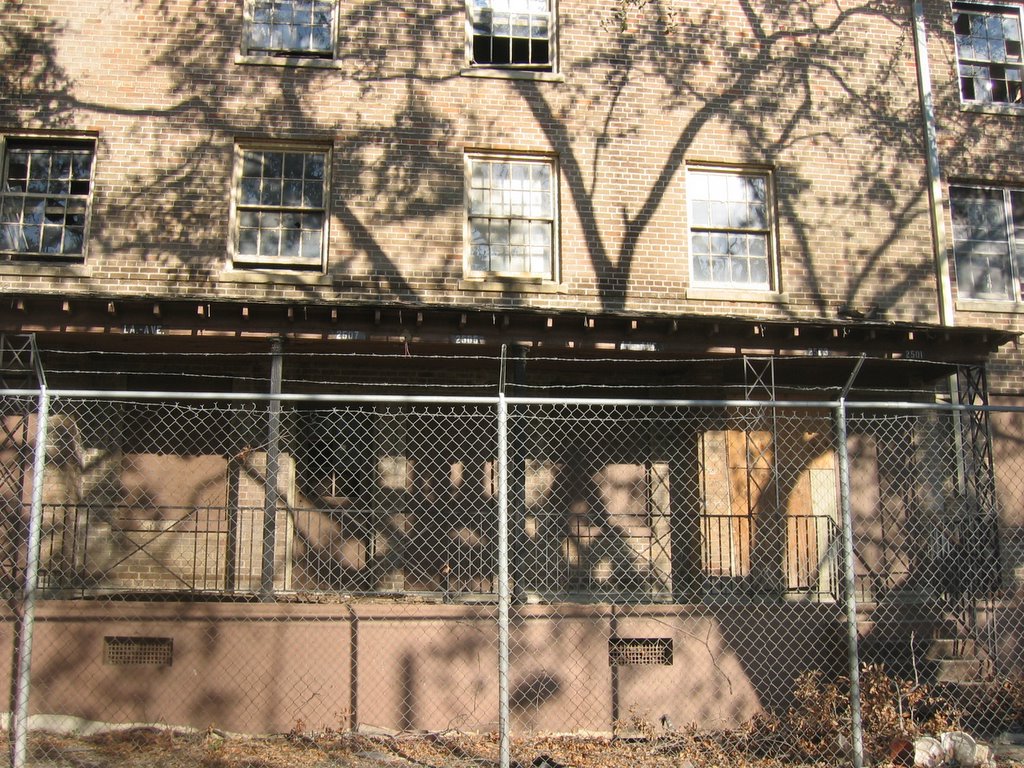
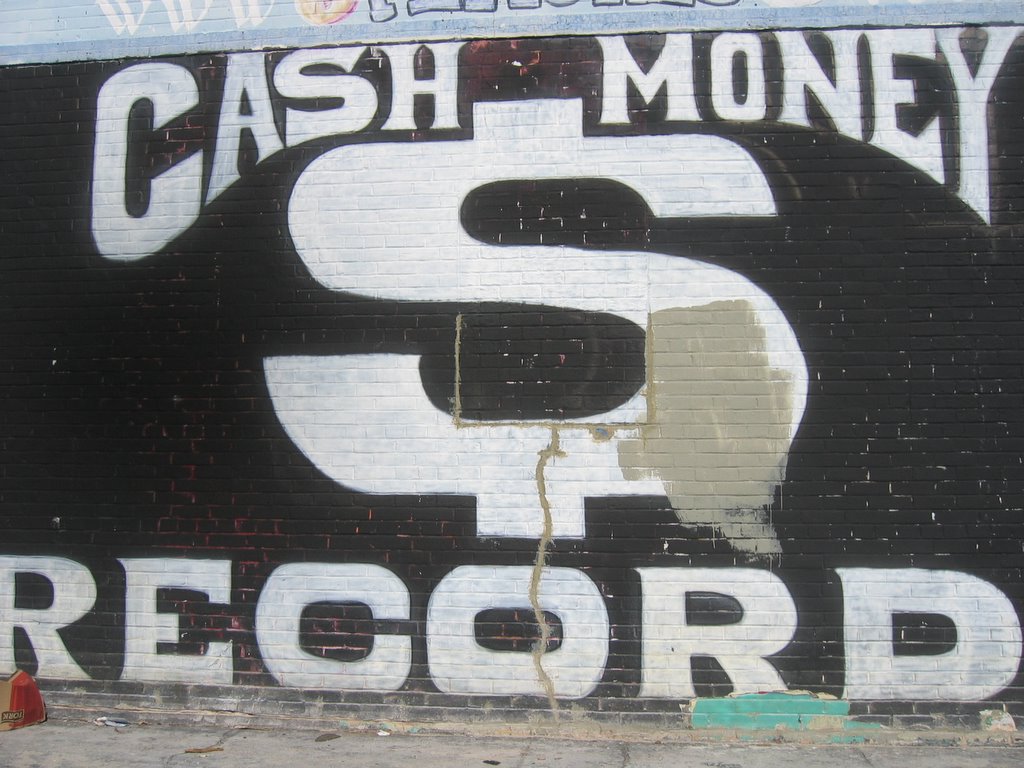
Some of America's worst living conditions were present in erstwhile New Orleans. The Magnolia Housing Projects, once home to Master P and Juvenile, are currently inhabitated only by vagrants and a few of those rendered homeless by Katrina. A terroristic feeling pervades this nasty low-rise public residential complex, which saw some of the highest concentrations 0f poverty, addiction, and violent crime.
I don't think it would be a particularly stellar idea to relocate the Magnolia residents en masse to a single locale. Maintaining a high density of gangstas, winos, and elderly would not lead to any increase in quality of life, even if the physical space were more sterile and fresh. 3rd World conditions, as they existed in many pockets of New Orleans, are fun to rep if you're trying to be tough, but they're certainly not fun to be subjected to. The NOPD, a notoriously corrupt and inept law enforcement institution, was certainly always perceived as an imperial foe uninterested in amerliorating the conditions of the natives, who lacked economic and political capital.
The hard-scrabble ghetto life of the 'Nolia produced culture, an ethos born of tremendous anguish and unending peril. The reason why Juvenile put "my trust in my 9 and myself first" is not that he thought guns were amusing. Dog-eat-dog values ensure survival in the projects, with access to financial and reproductive always insecure. I'm not going to pretend that I understand the extent of life's bounty or lack thereof in the hood. However, as an interested observer and experientialist, I would say that the hood produces culture because it's on the edge of Western civilization and it challenges the typically accepted nature of Western life. Doing away with the hood and assimilating the ghetto to middle-class Western society would most likely make us all safer (current hood residents most notably). But, ghetto communities, despite their defects, do usually have a redeemable social and cultural fabric that we destory with every extra step the giant of gentrification takes, whether in New Orleans, the Lower East Side, or West Baltimore.
Subscribe to:
Posts (Atom)