Showing posts with label urban. Show all posts

Wednesday, June 11, 2008

Mumbai Metro to the Fore

Mumbai's urban railway network is notoriously clogged with bodies. While around 13 people die every day from accidents, the city strives less-than-wholeheartedly to construct a thorough metro system. I wish India's largest urban agglomeration the best of luck in this enterprise, but I am fairly certain that the metro will not be completed for many years. I'll be supremely gladdened when the system finally does take off the ground. For the 6+ million people who grace the rails each waking day, any and every improvement is overdue.


Here are some links that deal with the Mumbai train system and the construction progress. This process surely takes some time!


Death Trains

mumbaimetro1

Mumbai Matters


Two conferences that I attended in Bombay, Urban Age Mumbai and the 5th International Conference of Critical Geography, presented very different approaches to urban development, but both undoubtedly would laud the speedy completion of the planned Mumbai metro. While neoliberal development advocates might be more at peace with the rapid influx of motor vehicles, the automobile's pathways cannot keep pace with the increase in car ownership. The public infrastructure of Mumbai just cannot meet the demands of the demographic increases that will not cease at any point in the near future.

There is no practical way of capping the density of Mumbai, but this should not discourage critical investments in infrastructure. It's just that the burden on any new infrastructure quickly wears away at the newness. There's no end in sight to the population explosion in 3rd World cities such as Mumbai. We can merely hope and beg for more expedient development of public transport so that the morass of motoring metal, bodies, and fumes does not spontaneously combust...

Wednesday, November 29, 2006

Hamsters, Bodymore, and Bawlmerese

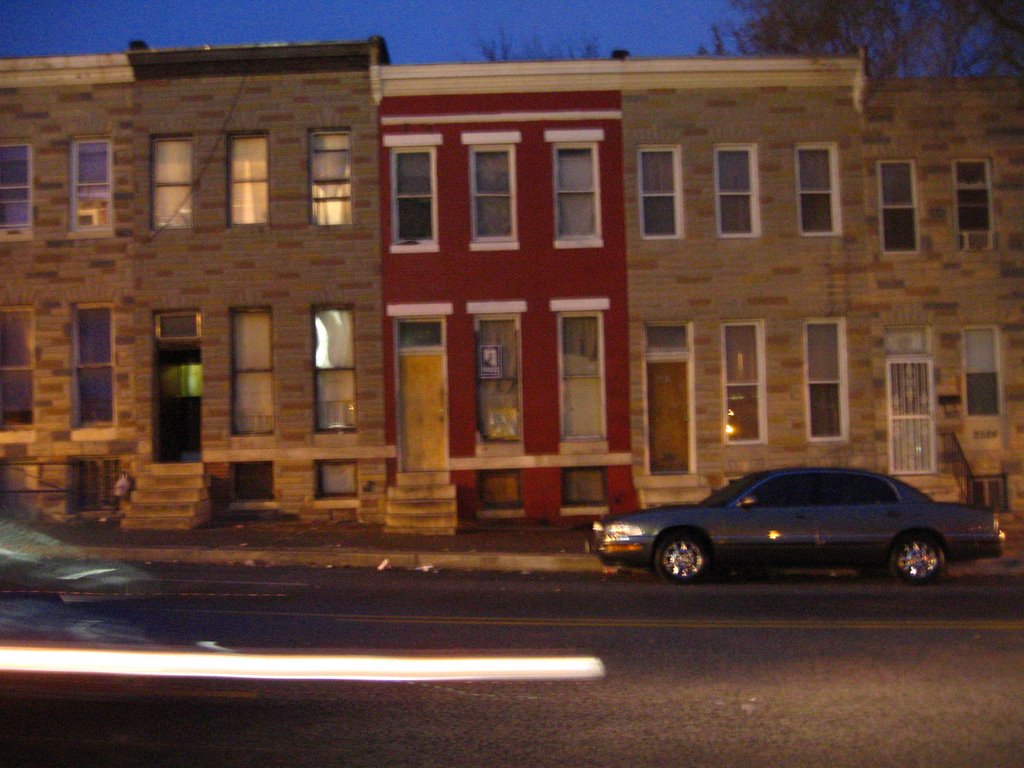
There are so many parochial facets of Baltimore that make this city's natives proud to call (c)Harm City home. The "o" in home is a long sort of "o," and there's a bit of a Hiberno-English or perhaps Cornish Enligh twang on the phoneme. All of you who are familiar with the highly particular "o" sounded in these parts will know of what I am speaking. While the accent and dialect of English spoken in Baltimore is similar to that spoken in and around Philadelphia, south Jersey, and up and down Delaware, the distinctly Baltimore accent is by far the most fascinating sort of mid-Atlantic English. Hyperbolic I am not, and you shall take a most pleasant trip to Highlandtown or Hampden to find out from where the mystique doth come.

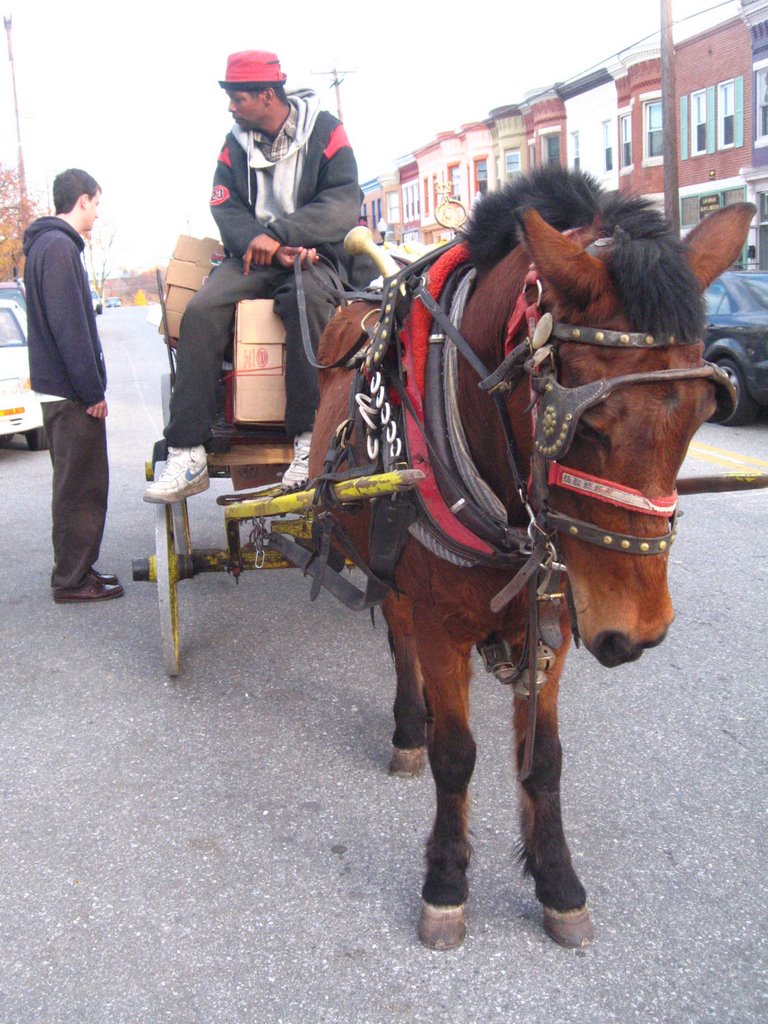
In particular, the hamsters (Hampden hipsters) became enthralled so much by the accent most commonly found in Hampden that they began to flock to the neighborhood formerly inhabited exclusively by mill workers and other industrially-inclined folk whose ancestors migrated there from Appalachia. Though the neighborhood was in serious decline throughout the 80's and 90's, the urban locale is now one of the hottest areas in B-more. The main commercial artery of Hampden is known as the Avenue (36th st.), where a mix of true Hampdenites, hamsters, and assorted other Baltimorons roam the strip. Kitsch, schmaltz, and authentic indigenous crafts dot the landscape, but an uneasy feeling of invasion pervades. Is the old Baltimore reluctant to step aside, or can the two demographic segments coexist harmoniously? A-rabbers still parade their donkeys across the Avenue, peddling their produce to pedestrians while parroting paeans. And, Hampden plays host to a breed of urban dweller that is said to have missed the second half of the 20th Century.
The rudiments of Baltimore's unique flava are found in horrible haircuts, mispronounced consonants, and in the remarkably parochial citizenry who typically cannot name more than three neighborhoods outside of the one they inhabit. These attributes are beautiful, and don't let anyone tell you otherwise. Gentrificious, educated, and stodgy folks might lend human capital to their geographic niches, but the masses provide cities with a sense of tradition, a love of things that aren't so peachy, like stubborn murder rates and b-more club. However, don't let this laundry list convince you that Baltimore hasn't been well-served by its honorable mayor. Also, don't be deceived into thinking that I don't adore my native city (though I do in fact currently reside in the northwestern portion of the metropolitan region and not in the inner sector).

Lord O'Malley has indeed created a city that is more amenable for absorbing yuppies. Though this town ought not truthfully proclaim (as it does on omnipresent bus stop benches) that it's the Greatest City in America, this town has a lot going for it. One native, Spankrock, once said that Baltimore is the most under-rated party city in America. A budding anthropologist from Manhattan's Upper West Side once became so obsessed with both Dundalk and Hampden that he decided to excise his uptown Yankee demons and become baptized as a born again Baltimoron.

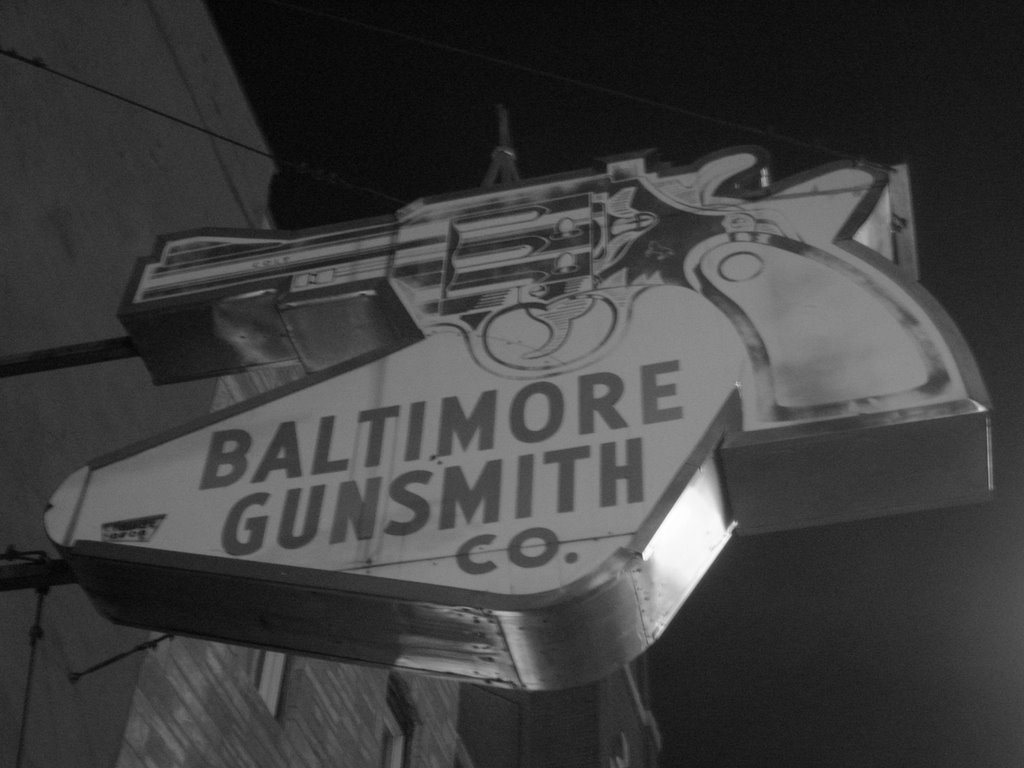
We got crabs, Berger cookies, and damn good police dramas abour our urban pharmaceutical industry. Stop Snitching, Babe Ruth, and Edgar Allan Poe all germinated in Baltimore. Long live Mr. Boh! How bout dem Ravens?

Me, I'm just impatiently waiting on the construction of two new mass transit lines: one, the Green, will be an extension to the NorthEast of the current Subway line that ends at Johns Hopkins Hospital; two, the Red, will run east-west from the Social Security Administration to Patterson Park, through downtown. These projects likely won't be completed til 2014 or so. We've got 1/3score to wait until Baltimore has a genuine public transit network. Citistat/Compstat may be able to pinpoint the locations of lead poisonings, waste removal, and property crimes, but it cannot provide sufficient impetus for an end to the tremendous favortism that city, state, and federal governments have exhibited for cars, highways, and sprawl. Enough is enough. Baltimore is back. JHU might be commandeering the Middle East community, but B-more is on the map now more than ever. After New York City, Baltimore was the 2nd city in the US to reach a population of 100,000. In fact, until 1870, Baltimore was indeed the 2nd most populous city in the nation. Rod Lee, show these knuckleheads what time it is!

Saturday, October 28, 2006

Critical Mass On a Mission


The city of San Francisco has an inordinate tolerance for all manner of street celebrations. In the spirit of revelling, revolutionizing, and reviling in the street, this town's inhabitants display an uncanny level of respect for progressive culture and politics. Since my arrival here, I've participated in more demonstrations, festivals, and gatherings than perhaps I had in the whole rest of my life. Well, that might be a stretch, but either way, I want to promote a vision of this place as being ground zero for blunt expressions and manifestations of the urban will to power. SF makes me proud to rep a wide array of causes celebres, social reforms, and illogical idiosyncratic illin' at all hours.

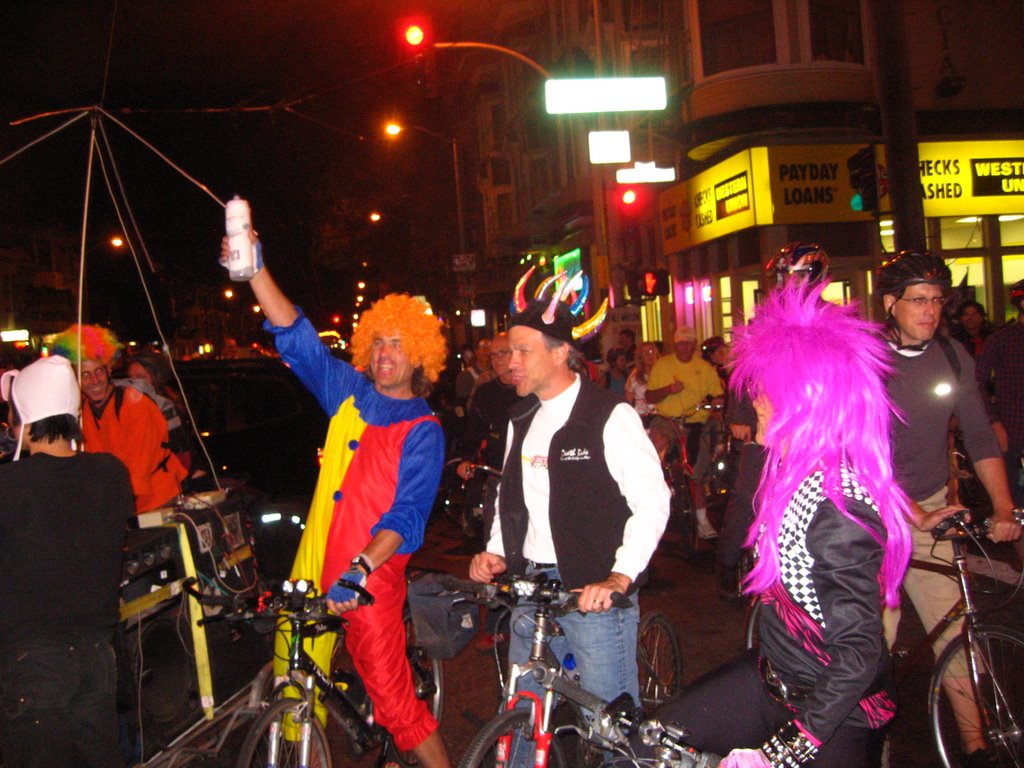
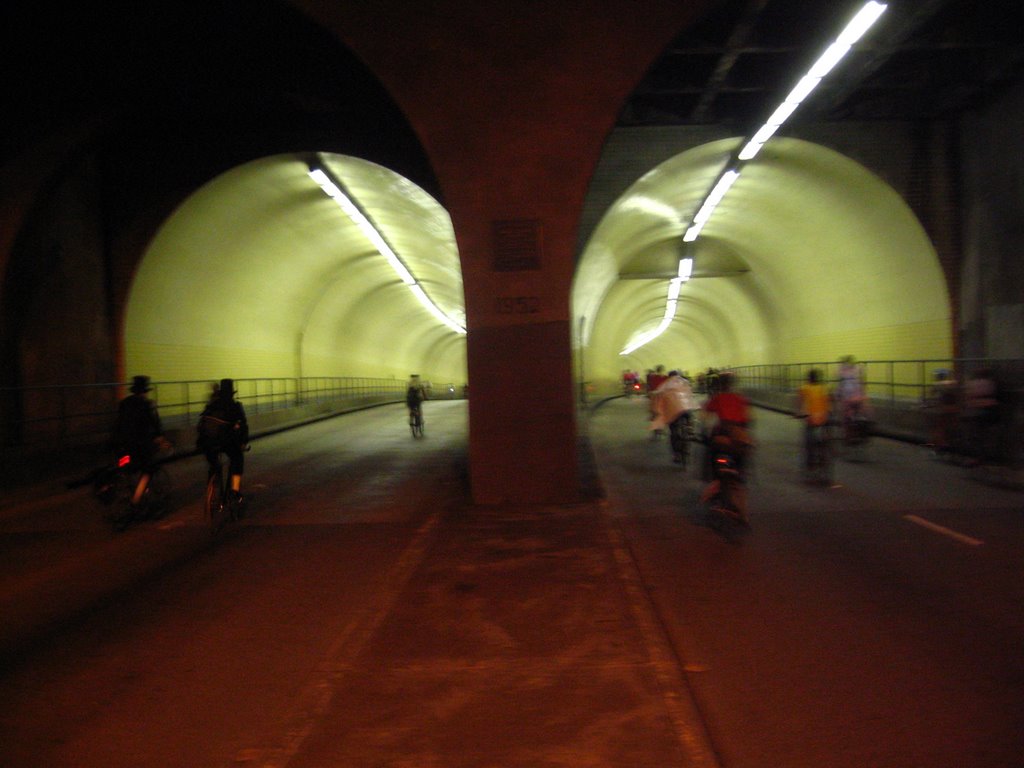
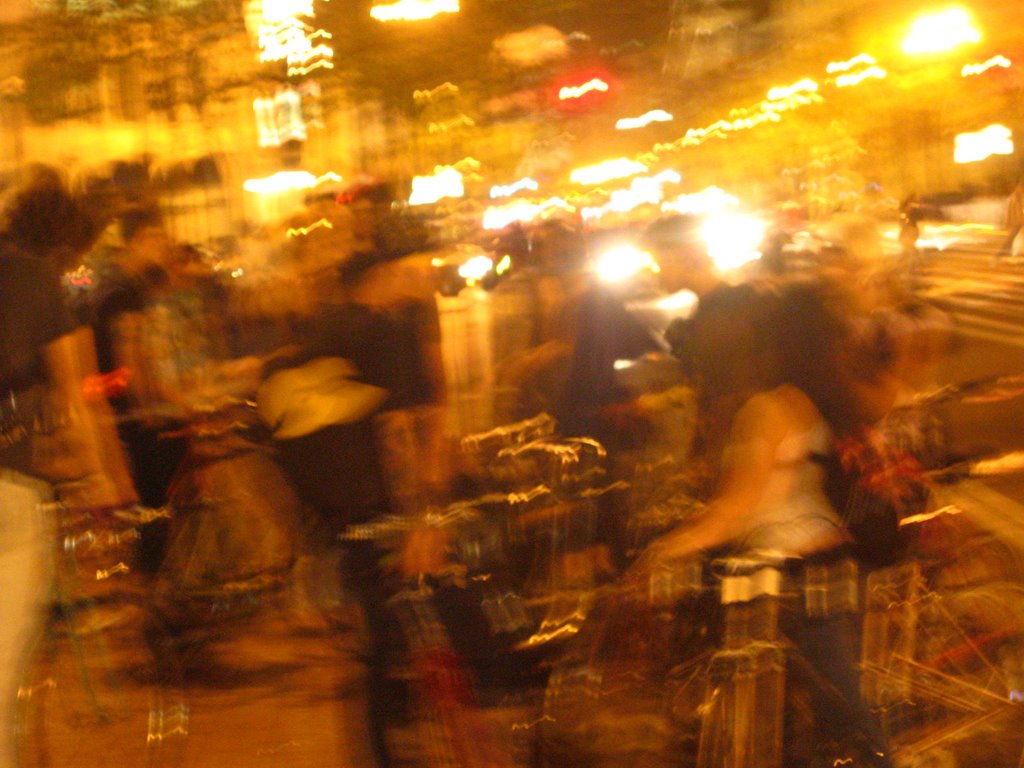
The fervor with which last night's Critical Mass rally barreled through the streets turned me gleeful. I was thoroughly humored by the massive outpouring of support for the cause of bicycle riding. Critical Mass started controversially in this city 14 years ago. Having expanded to countless cities across the globe, the gatherings on the last Friday of every month continue to pit bicylists against motor vehicles. The monthly battles seek to gain momentum for politics that de-prioritize the health and wellbeing of the dominant culture of the pernicious motor vehicle. Critical Mass rallies block the flow of traffic in the hopes of generating enough attention to foment some real change in how our cities are set up. Bikes not building bombs. Bikes not financing SUV boors. Bikes not buying morbid machines.
Over a thousand bike peoples riding.
Riding
Riding
Riding
Riding
Riding
Riding
Cars be gone.
Gone
Gone
Gone


2
wheels
are
better
than
4.
halt
traffic
now.
Ride
or
die.

Monday, December 19, 2005

Hood House Holdings, LLP

If y'all didn't already know, Gabe Nelson and I are highly interested in undertaking a business venture called Hood House Holdings, which would invest in a blighted block somewhere deep in the hood. Our goal is first to identify a place so immersed in blight that other real estate sharks have not beat us to the punch. It's very important to get a good value on a purchase. Thus, we would like to avoid locations where demand for hood houses is already elevated. In addition to having deep hood status, it would be optimal for the location to be near somewhat commerical amenities and also in proximity to some sort of green space.

Second, upon identifying our block of interest, the next task is project financing. We intend to keep the city abreast of our plans, but we are not certain if we could cut a deal with the city for a whole block of abandoned, city-owned property. Either way, we would be shopping around to banks for a competitive loan for our Hood House Holdings venture. It's a shame that interest rates have gone up several percentage points on commerical loans in the past two years. It's not quite as cheap these days as it was when interest rates bottomed out. Regardless, other sharks face the same market pressures, as the money supply is tightened and less projects in general seek financing.

Third, after ascertaining a solid plan for financing this venture, the perfect opportunity would arise to design a block-long hood house with amenities never before seen in an American hood. Upon assembling a team of certified Hopkins engineers, the house would get severely tricked out. I suppose the security system would first need to be tweaked, since such a feature would prevent future loss of goods from the Hood House. The exterior of the dwelling would get tagged up by our team of graf artists, and we would commission the city's gayest landscape designers to spruce up the sidewalk and generally spruce up the Hood House. Internally, we would definitely require some rather serious renovations to the existing property. Hipsterites and like-minded folk would be promised a spot in the dwelling complex if they agreed to participate in the project.

Overall, the general concepts have been described for our plan to enter into a serious process of Hood renewal. We are interested in this mission to create an oasis of different culture in the otherwise-blighted Hood. Moreover, it'll be an affordable place to live and a solid real estate investment. In our process of detournement, we seek to extend the Situationist ideal to the hood. Spontaneous injection of postmodern attitudes and contrarian sensibilities into the Hood will be a way to address the outrageous separation that characterizes our divided society. We aim to counter the trend of gentrification with our brand of residential and commerical life, which not only respects Hood hospitality but actually integrates the finest aspects of Hood life into the fabric of our venture. We extol certain aspects/virtues of hood culture and seek to live on the fringe of bourgeois society, forming a link between the outcasts of the Hood and the card-carrying bourgeoisie.

Hood House Holdings is gettin' busy. Watch out now, we're bringing the whole crew in for Situationist instigation and exaltation.

Wednesday, December 14, 2005

Stop Snitchin


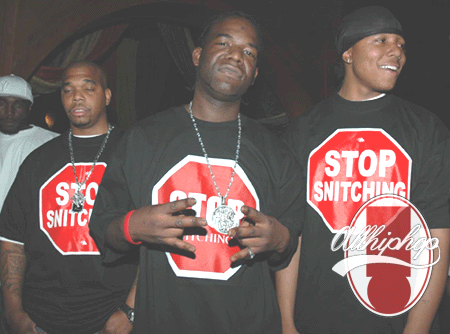
Ok, I think by now everyone is familiar with the Stop Snitching enterprise. I jumped on the Stop Snitching bandwagon last spring, with a purchase of the DVD on the internets. For months, I basked in the glory of the street motto, throwing around the hoodrat banter because it's catchy and rebellious. To revel in the popularity of Stop Snitching is to identify with the "street" - a lifestyle, mindset, and society that exists outside the bounds of white-dominated, middle-class, standard law and order civilization. Hip-hop derives its credibility from its subversive ability to mock a set of bland bourgeois values in favor of a flashy, rhythmic, and unruly culture.

However, it is a mistake to suggest that the Stop Snitching creed typifies all of hip-hop culture. This creed is undoubtedly highly pervasive in a large segment of the population that identifies with hip-hop. Yet, at some point, the line between foul, gangland violence and stylized urban garb becomes blurry. Does donning the Stop Snitching uniform imply that one embraces witness intimidation at its ugliest?

Currently, three Bloods are standing trial in Baltimore for firebombing a snitch's house. This sinful snitch happens to be the Harwood Community Association President, Edna McAbier. After years of watching thugs take over her neighborhood, McAbier began contacting the police more and more. Because she threatened the turf and thus profits of neighborhood dealers, Snitch McAbier got Molotovs launched at her crib. Does the Stop Snitching credo truly intend to silence innocent civilians on the sidelines of the drug war? Or ought it apply only to those who are part of the game?

It seems to me that some mafias respect their community fabric to the extent that no elderly lady would ever need to rat them out. However, so much gang violence in American cities has reached the point where ferocious kingpins or even minor wankstas feel menaced by geriatric neighborhood residents. Where's the justice? Stop snitching, both in video and t-shirt formats, is filled with humor and cultural nuance. However, the witness intimidation problem has become too severe to condone the whole phenom. On the one hand, I seek to extol the virtues of a rebellious subculture. On the other, I realize that too many people suffer unnecessarily when thugs tip the scales of justice in their favor.

This is not to say that I wholly empathize with urban law enforcement. I am adamantly opposed to the drug war for so many reasons. I think the so-called war on drugs is misguided, ridiculous, and inappropriate. So, perhaps law enforcement has pushed drug dealers to resort to such vile tactics. The police, in many instances, are equally a band of street thugs. I resent the tactics of both the legally-sanctioned enforcers and the illegal street soldiers. Neither side is willing to step down at this point. And, consequently, we all lose! Innocent lives are lost in the hood due to gun clapping and all manner of street antics. The civil liberties of young men are compromised across the country because law enforcement seeks to weed out the gangstas among us. Drug addicts are prevented from attaining optimal health because we have criminalized their medical problems. Law enforcement funds and other public resources are squandered on an endless battle to up the violence ante and to shower us with government propaganda.

The time has come to halt both the government gangs and the street gangs, for both are complicit in an undying war. With steady demand for hard drugs, the supply will always be available from somewhere. Regardless of how many open-air drug markets are shut down or how many drug dealers are locked up, the scourge of drug addiction will remain. The link between violent crime and psychological/medical deviance must be severed. Addiction is a medical problem, and violent crime is only necessary because dealers seek to protect their territory.

George W. Bush, come out of your rock house and tell your federal boys to start selling rock on the block. Put the dealers out of business by undercutting them - with your treatment centers dotting every major city in the country. Too many people have a vested interest in this game. Too many people have too much pride to snitch and too much idiocy to change.

I'm not sure what percentage of urban GDP is illicit drug sales. The jobs provided by this industry are indeed sought after. Profits can be enormous, but death or incarceration is virtually certain. Talented young men are lost to the drug trade when they could be excelling in other more healthy pursuits. Resources should be poured into shifting dealers into legitimate employment. In any event, jails are a short-term solution for a society that has no regard for long-term consequences. Jails provide us with tougher and tougher thugs.

Law enforcement needs to put down its big guns, too. The whole law enforcement industry (corrections, local police, DEA, FBI) has a vested interest in maintaining the current level of funding and support for the drug war. Many in this community derive profit from this sinister process. The pigs need to cooperate with the dealers and save the lives of innocent bystanders. And, the dealers cannot enforce the Stop Snitching code on those who remain outside the game, who have not agreed to abide by the street contract. Either way, drugs will eventually be taken out of the street game and pushed by medical staff in scrubs. And, I suppose, the thugs in their long white tees will ultimately find other poisons to push, once this urban pharmaceutical hustle dries up.
 
Google
Locations of visitors to this page Locations of visitors to this page Locations of visitors to this page Locations of visitors to this page